1-212-381-1055
 61-3-8820-5043
  021-111-279-111

Eid al-Adha is one of the biggest Muslim festivals, celebrated by Muslims around the world to show the true spirit of sacrifice and obedience to Allah. This Eid al-Adha celebration, also called the Festival of Sacrifice, happens every year on the 10th day of Dhul Hijjah. It remembers the incredible faith of Prophet Ibrahim (peace be upon him), and what it really means to put your trust in Allah above all else.
Almost every Muslim around the world marks this day, and if you have ever wondered how muslims celebrate Eid al-Adha, it is a beautiful mix of worship, family, food, and looking out for people who have less. It is the same core celebration everywhere, even if the small traditions change from country to country. This blog will walk you through all the common Eid traditions, the meaning of Dhul Hijjah, the link between Eid al-Adha and Hajj, the sunnah acts on Eid al-Adha, and all the regular Eid al-Adha activities that make this day so special.
What makes Dhul Hijjah so special
Eid does not just start on the 10th. The whole lead-up is part of it. Dhul Hijjah is the last month of the Islamic calendar, and the first 10 days are the best days of the entire year for good deeds. Most scholars say you get more reward for any good act in these 10 days than at any other time, even Ramadan.
The 9th day is the Day of Arafah. If you are not going for Hajj, fasting this day is one of the best things you can do all year. It is said to wipe away the sins of the last year and the one coming.
Most Muslims will spend these 10 days praying a little extra, reading more Quran, giving charity, and trying to be better people. It is a quiet time to get ready spiritually, so that when Eid comes, it is not just a day of eating and fun, but something with real meaning. This is the significance of Dhul Hijjah that a lot of people outside the community never hear about.
Eid al-Adha and Hajj
Eid and Hajj are two sides of the same coin. Hajj, the pilgrimage to Makkah, finishes exactly on the day of Eid. Millions of pilgrims will stand on the plain of Arafah on the 9th, then make their way to Mina to offer their sacrifice on the morning of the 10th.
And at the same time, every single Muslim around the world will be doing the same thing. That is the magic of this Eid. You do not have to be in Makkah to be part of Hajj. Every single person who offers Qurbani at home is joined in the same act as every pilgrim. It makes the whole global Muslim community feel like one big family.
The whole festival goes back to the story of Ibrahim, when Allah asked him to sacrifice his son Ismail. Both father and son agreed without hesitation, and at the very last second, Allah replaced Ismail with a ram. This story is not about sacrifice for the sake of sacrifice. It is about trust.
Sunnah acts on Eid al-Adha
There are a lot of small, simple things that the Prophet Muhammad (peace be upon him) used to do on Eid that most Muslims still follow today. These are the sunnah acts on Eid al-Adha.
You wake up early, take a full bath, put on your nicest clean clothes, and if you have it, a little perfume. You walk to the prayer ground, saying Allahu Akbar out loud. You go one way to prayer, and come home a different way, so you get to say Eid Mubarak to as many people as possible.
You do not eat anything before prayer. The first thing you eat on Eid day should be a little bit of meat from your own sacrifice. And if you are going to do Qurbani, you do not cut your hair or nails from the first day of Dhul Hijjah until the sacrifice is done.
None of these are hard rules. They are just small, gentle acts that make the day feel special, and connect you to the way Muslims have celebrated Eid for 1400 years.
How Muslims celebrate Eid al-Adha
The day starts with the Eid prayer, held just after sunrise. Everyone gathers in the mosque, or more often, a big open field. There are no fancy decorations. Everyone is just happy to be there. The prayer is short, followed by a short talk reminding everyone that the whole point of this day is to share.
Then comes Qurbani. Any family that can afford to will sacrifice a sheep, goat, cow, or camel. The meat is split into exactly three equal parts. One third for your family. One third for friends and relatives. One third for anyone who needs it. This is the part of Eid that most people who are not Muslim never hear about. Nobody keeps all the meat. Nobody eats while someone else goes hungry.
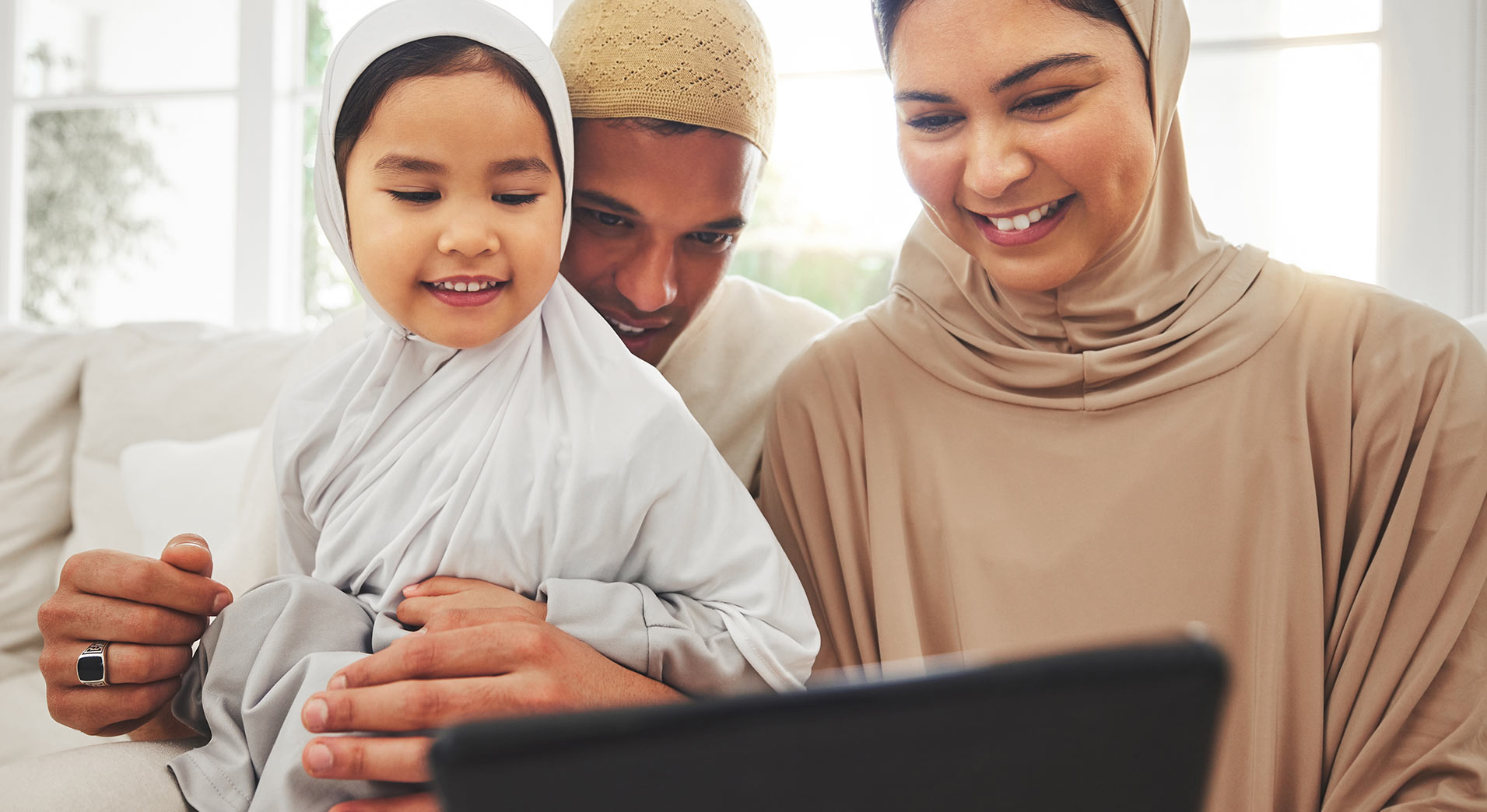
After that, the Eid al-Adha activities start. You go home, cook, and then spend the rest of the day visiting people. You go to your parents’ house, your uncle’s, your friends. Everyone feeds you. Kids run around getting Eidis, small cash gifts from every elder they meet. Communities will drop off meat to orphanages, homeless people, refugee families, and anyone who would not otherwise have any.
Eid traditions around the world
Eid al-Adha traditions are a little different everywhere, but the core never changes. In Pakistan and India, everyone eats biryani, and girls get mehndi on their hands. In Malaysia, people run open houses where anyone can walk in off the street and eat. In the Middle East, extended families will sit and eat together for 6 hours straight.
But everywhere you go, you will see the same things. People are saying Allahu Akbar loudly together. People visit the graves of their loved ones to pray for them. People give away money and food to anyone who needs it. The food changes, the clothes change, but the heart of Eid is the same in every country on earth.
The lessons of Eid do not end when the third day is over. A lot of Muslims today use online Quran teaching to learn more about the story of Ibrahim and the meaning of Dhul Hijjah, to make sure they pass on the real meaning of Eid to their kids, not just the fun parts.
At the end of the day, the Eid al-Adha celebration is not about big parties or fancy clothes. It is about proving that if you have been blessed with something, you share it. It is about the quiet link between Eid al-Adha and Hajj that connects every Muslim on earth. It is about the small, simple sunnah acts on Eid al-Adha that have stayed the same for thousands of years.